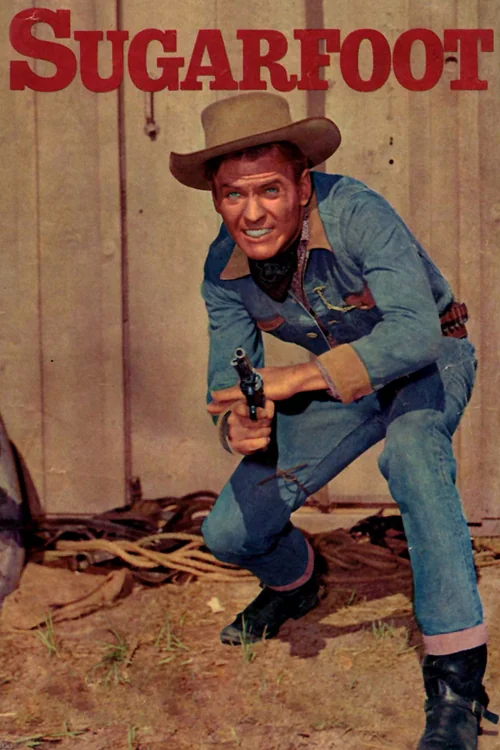
Sugarfoot
Set in the Oklahoma Territory, Sugarfoot follows Tom Brewster, an educated Easterner who arrives in the West determined to become a lawyer. Lacking frontier polish and confident riding skills, he’s quickly branded Sugarfoot, a nickname even rougher than tenderfoot. Using wit, persistence, and a growing understanding of local life, Tom navigates feuds, scams, and hard-edged towns where arguments often end with fists or gunfire.
Sugarfoot centers on Tom Brewster, a book-smart young man from back East who heads to the Oklahoma Territory to build a life as an attorney. Tom has studied law by correspondence and talks like a gentleman, but he steps into a world that values toughness and quick instincts more than diplomas. His awkwardness in the saddle and unfamiliarity with cowboy customs earn him the mocking label Sugarfoot, and it sticks wherever he goes. Each episode finds Tom drifting into a new community problem: a threatened homestead, a crooked businessman, a misunderstood outlaw, or a brewing range dispute. Rather than relying on brute force, he tries to reason, negotiate, and investigate, learning when diplomacy works and when it doesn’t. Along the way he meets colorful allies and dangerous opponents, gradually proving that courage and brains can matter as much as a fast draw.