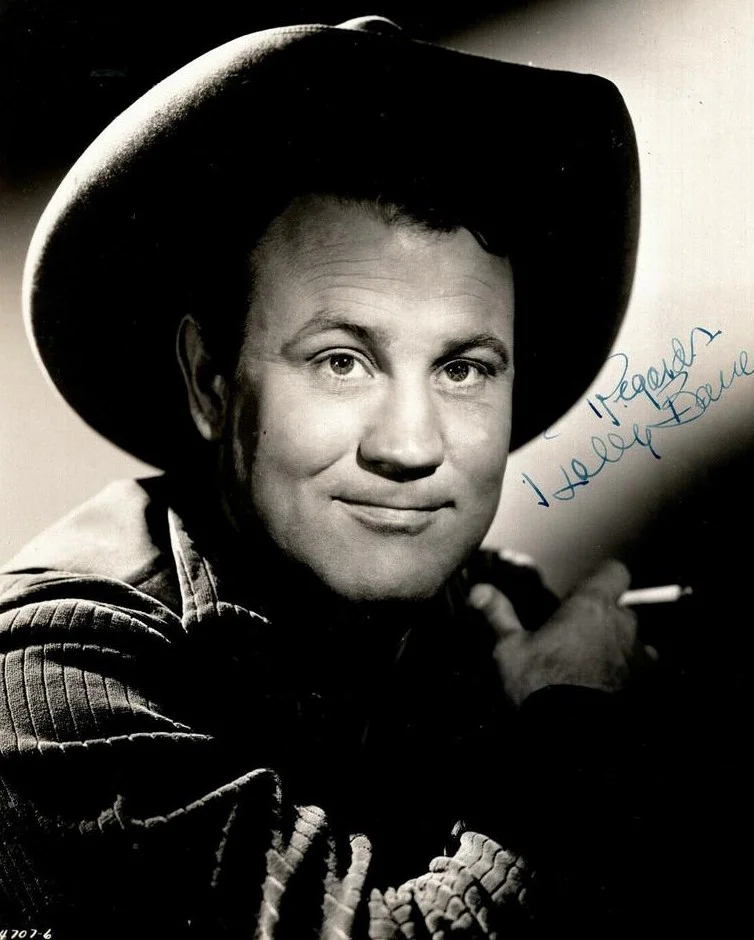
Photo: Monogram Pictures Corp.. Mike Ragan in a 1947 publicity photograph. Commons identifies the image as public domain in the United States; its file page retains the publication rationale. Public domain (United States). Portrait resized and converted; share image cropped with text added. See the source and license details below. Image credits
Intro
Mike Ragan worked both in front of the camera and in film and television makeup. Earlier credits often identify him as Holly Bane or Hollis Bane. Those names refer to the same performer, an important distinction when following a career made up of supporting parts rather than a single starring series. Westerns form a substantial part of his acting record, while later makeup work connects him to a different group of familiar television productions.
Career snapshot
The IMDb biography describes a Los Angeles beginning: Ragan entered MGM as an office boy, moved into makeup work and learned under Jack Dawn. Military service interrupted his early screen career, after which he returned to studio work and developed his acting credits. The same account describes his frequent casting as gunfighters and henchmen in westerns. Its outline is useful, but individual credits provide more precise evidence of what he actually played and how he was billed.
The entry point
Batman provides a television point of entry into Ragan's acting career; IMDb's record includes an image of him from the 1966 series. This is not a claim that he belonged to its principal cast. For a broader understanding, move from the recognisable television title to the smaller western roles documented by the American Film Institute. The contrast shows why supporting performers can remain familiar to viewers even when their names are less prominent than those of the stars.
Screen identity and style
In The Return of Wildfire, AFI identifies Mike Ragan, billed as Holly Bane, as Dirk. The 1948 western's cast also includes Richard Arlen, Patricia Morison, Mary Beth Hughes and Reed Hadley. Ragan's place in that ensemble is a specific, named part rather than a generic assertion that he appeared in westerns. When watching, follow where Dirk enters the action and how his scenes connect to the central characters. The credit provides a reliable way to recognise him under the earlier professional name.
Collaborations and patterns
Fence Riders supplies another documented example. AFI lists him as Gus, again credited as Holly Bane, in the 1950 Monogram western directed by Wallace Fox and headed by Whip Wilson. The same year's Radar Secret Service places him in a different kind of story: AFI records a truck-operator role under the Bane credit in Sam Newfield's film. Together these records distinguish the actor's identity from the names and occupations of the characters he played.
Era reflection
Ragan's later makeup credits include Welcome Back, Kotter, Barney Miller and Fish, according to the biographical account. These are crew contributions and should not be mistaken for acting roles. The gallery deliberately labels that difference. Its production artwork may show the shows' stars; it illustrates the projects to which his work contributed, while the separately credited publicity portrait identifies Ragan himself. A career can continue behind the camera after the pattern of its screen appearances changes.
Legacy and rediscovery
The most useful way to follow Ragan is to keep both the professional aliases and the type of credit in view. Holly Bane in an AFI cast record and Mike Ragan in a later biography belong to one career, but an acting part and a makeup assignment remain different kinds of work. His record offers a view of studio employment beyond leading roles: repeated supporting appearances, practical craft and movement between departments. The selected examples here preserve those distinctions rather than turning every familiar title into a starring credit.
A career in pictures
Selected career milestones. Years identify the production or labeled milestone; recurring actors may join a series later. Artwork represents the production and may show other cast members. Select an image for a larger view.
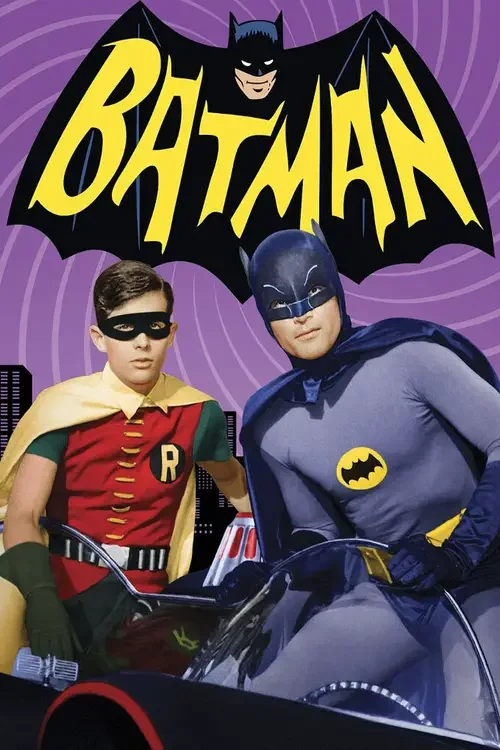
Batman
Supporting screen appearance. Original television series artwork, not a portrait of Ragan.
Production artwork from the DailyTimeCapsule archive. Image credits
Welcome Back, Kotter
Makeup work. A behind-the-camera career credit; production artwork.
Production artwork from the DailyTimeCapsule archive. Image credits
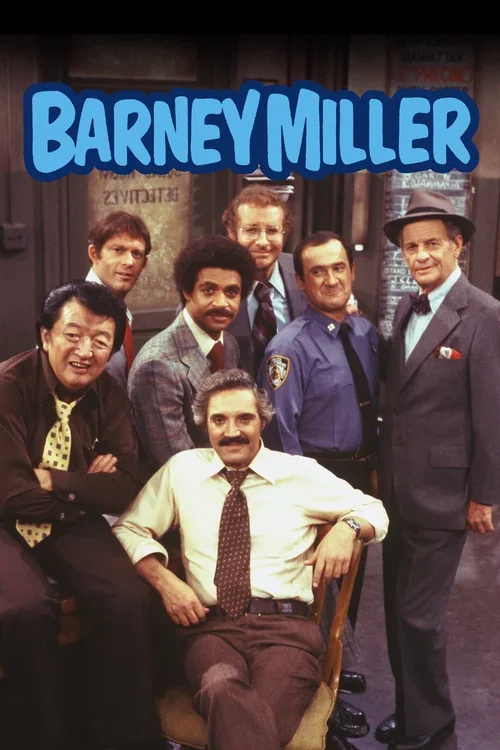
Barney Miller
Makeup work. Crew contribution, not an acting role; production artwork.
Production artwork from the DailyTimeCapsule archive. Image credits
Rewatch notes
- AFI connects the Holly Bane credit directly to Mike Ragan.
- Fence Riders credits him as Gus; Radar Secret Service lists a truck operator.
- The Kotter and Barney Miller gallery entries represent makeup work, not cast roles.
Career highlights
Original television series artwork, not a portrait of Ragan.
A behind-the-camera career credit; production artwork.
Crew contribution, not an acting role; production artwork.
Sources and image credits
Portrait: Monogram Pictures Corp.
https://commons.wikimedia.org/wiki/File:Mike_Ragan.jpg
License: Public domain (United States) https://commons.wikimedia.org/wiki/File:Mike_Ragan.jpg
- Batman — Production artwork from the DailyTimeCapsule archive.
https://www.imdb.com/name/nm0051816/ - Welcome Back, Kotter — Production artwork from the DailyTimeCapsule archive.
https://www.imdb.com/name/nm0051816/ - Barney Miller — Production artwork from the DailyTimeCapsule archive.
https://www.imdb.com/name/nm0051816/
Reviewed September 27, 2026. Source references and image credits are listed below. This is a selected profile, not a complete credit list.
- IMDb: Mike Ragan biography and professional identity
https://www.imdb.com/name/nm0051816/ - AFI Catalog: The Return of Wildfire
https://catalog.afi.com/Film/25697-THE-RETURN-OF-WILDFIRE - AFI Catalog: Fence Riders
https://catalog.afi.com/Catalog/MovieDetails/26315 - AFI Catalog: Radar Secret Service
https://catalog.afi.com/Film/26460-RADAR-SECRET-SERVICE - Commons: Mike Ragan publicity portrait provenance
https://commons.wikimedia.org/wiki/File:Mike_Ragan.jpg
Production artwork is reused from the DailyTimeCapsule archive. The imagery represents the production and may not depict this actor or their particular season. Portrait and share-photo attribution appears beneath the portrait.
Corrections: hello@dailytimecapsule.com