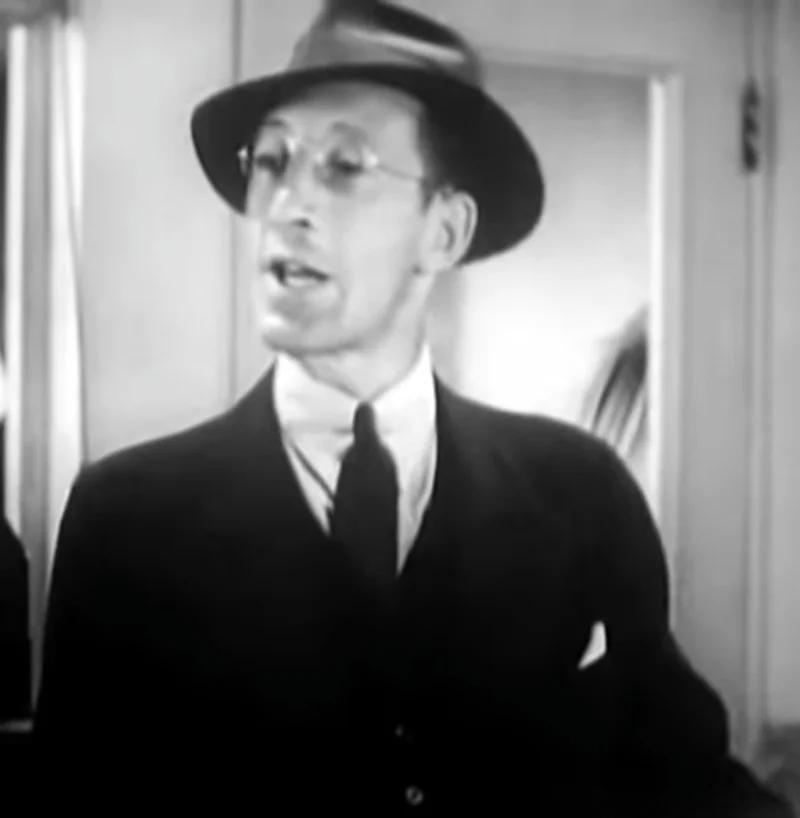
Lady Luck: portrait frame (1936)
Mr. Feinberg
Frame from the Charles Lamont film.
Entry point: Petticoat Junction (1963–1968).
Explore the career in pictures
Updated
Charles Lane was an American character actor whose lean appearance, precise delivery and frequent portrayals of impatient authority figures made him recognizable across generations of films and television. Born in San Francisco on January 26, 1905, he worked under his birth surname Levison before becoming known professionally as Lane. Television viewers often remember Homer Bedloe, the railroad executive on Petticoat Junction. Film audiences may recognize him from Frank Capra pictures or brief encounters with other stars. This page concerns the performer born in 1905, not the earlier silent-film actor of the same name.
Lane’s screen career developed during the early sound period. His credits included appearances in Smart Money, Blonde Crazy, Employees’ Entrance and 42nd Street, sometimes in parts small enough to go unbilled. That pattern is central to his story. A supporting performer could become familiar through repeated appearances without receiving the publicity or narrative space of a leading actor. Watching Lane’s early work offers a chance to notice how an office exchange, a business objection or a sharply delivered line can establish a social setting in very little screen time.
Petticoat Junction supplied a recurring version of the obstructive official through Homer Bedloe, whose railroad business repeatedly threatened the Hooterville way of life. The character’s relationship to the series’ local community made him a returning source of conflict. Lane’s role is best approached as comic opposition within an ensemble, rather than a villain detached from the program’s tone. The audience could recognize the type before a scene had fully unfolded, leaving the comedy to develop from the particular plan, resistance or reversal that followed.
Lucille Ball also repeatedly cast Lane in her television work, including I Love Lucy and The Lucy Show. Their association brought his controlled, often exasperated screen manner into contact with characters whose behavior disrupted routine. In a comedy built around misunderstandings and escalating situations, an apparently inflexible person can provide the boundary that makes the disruption legible. That is a viewing observation rather than a claim about Lane’s private personality. His familiar professional persona should not be treated as a biographical description of the man away from the set.
His association with Frank Capra included Broadway Bill, Mr. Deeds Goes to Town, You Can’t Take It with You, Mr. Smith Goes to Washington and It’s a Wonderful Life. These films place Lane within larger ensembles and social worlds. The repeated collaboration is a useful route through his filmography, but it does not encompass all of it. Lady Luck, directed by Charles Lamont in 1936, is represented in this gallery by distinct frames. The AFI Catalog identifies Lane in its cast, alongside Patricia Farr, William Bakewell and the other performers in the film.
The two gallery images come from the same 1936 production and are explicitly labeled that way. They provide different views of Lane in a single role, not evidence of separate career periods. This limited visual record is supplemented by the biography and selected television and film credits. For a performer whose contributions were often brief, even a small surviving image sequence can help viewers connect a face with a name. It should still be read in the context of the entire scene and the production from which it came.
Lane died on July 9, 2007, aged 102. His long life and extensive credits made him a link between early Hollywood sound filmmaking and later television comedy. A practical introduction pairs an early film such as Lady Luck with a Petticoat Junction appearance and an I Love Lucy episode. The comparison brings recurring qualities into view while also showing how different ensembles use them. His career is a reminder that a recognizable supporting presence can become part of popular memory even when the performer rarely occupies the center of the story.
Two distinct frames from Lady Luck identify the young screen performer. Both are from 1936; select either for a local enlargement.
Mr. Feinberg
Frame from the Charles Lamont film.
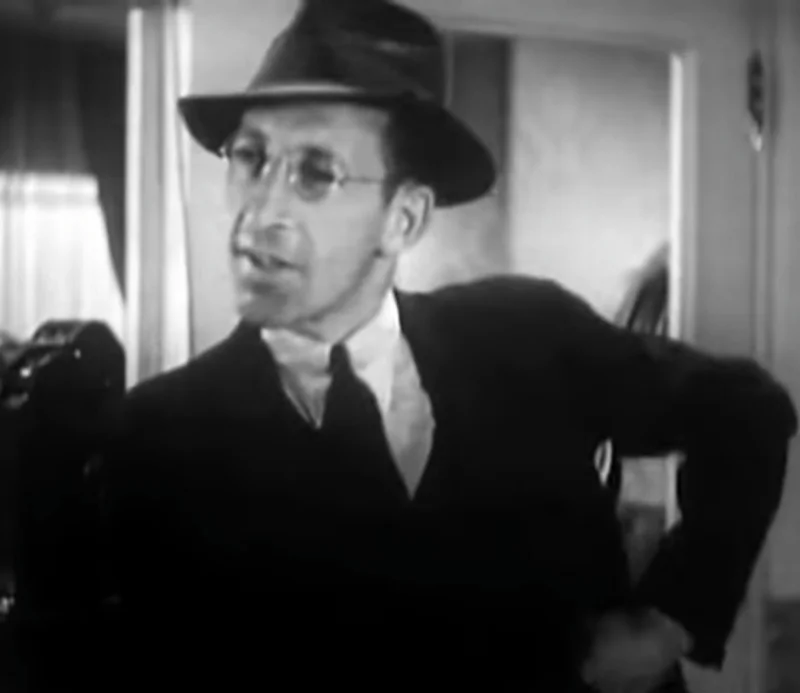
Mr. Feinberg
A distinct frame from the same film; not a separate production or later portrait.
Associated Press: Charles Lane obituary
https://www.legacy.com/legacy/notable-deaths/charles-lane
Charles Lane: actor born 1905
https://en.wikipedia.org/wiki/Charles_Lane_(actor,_born_1905)
AFI Catalog: Lady Luck
https://catalog.afi.com/Film/7243-LADY-LUCK
Commons: portrait provenance and license
https://commons.wikimedia.org/wiki/File:Charles%20Lane%20in%20Lady%20Luck%20%281936%29.jpg
Corrections: hello@dailytimecapsule.com
Work: Charles Lane in Lady Luck (1936).jpg
Creator: Chesterfield Motion Pictures Corporation
Date: 1936
Original source: https://commons.wikimedia.org/wiki/File:Charles%20Lane%20in%20Lady%20Luck%20%281936%29.jpg
Primary archive: https://commons.wikimedia.org/wiki/File:Charles%20Lane%20in%20Lady%20Luck%20%281936%29.jpg
License: Public domain
License URI: https://commons.wikimedia.org/wiki/File:Charles_Lane_in_Lady_Luck_%281936%29.jpg
Changes: Resized and converted to WebP; portrait also placed in a titled share image. No endorsement implied.
Rights scope: No endorsement implied. See the stated license and modification notice.
Work: Charles Lane in Lady Luck (1936) 2.jpg
Creator: Chesterfield Motion Pictures Corporation
Date: 1936
Original source: https://commons.wikimedia.org/wiki/File:Charles%20Lane%20in%20Lady%20Luck%20%281936%29%202.jpg
Primary archive: https://commons.wikimedia.org/wiki/File:Charles%20Lane%20in%20Lady%20Luck%20%281936%29%202.jpg
License: Public domain
License URI: https://commons.wikimedia.org/wiki/File:Charles_Lane_in_Lady_Luck_%281936%29_2.jpg
Changes: Resized and converted to WebP; portrait also placed in a titled share image. No endorsement implied.
Rights scope: No endorsement implied. See the stated license and modification notice.